A good wrap is mostly decided before the film comes off the roll. This is the sequence we recommend, and the detail that separates a wrap that lasts five years from one that lifts in five months.
From choosing your film to a flawless finish — here's how we work.
Browse 500+ colors and finishes. Request a free sample kit to see and feel the quality before ordering.
Calculate the exact footage needed. Order by the linear foot or in full rolls for any project size.
Use professional cutting tools for precision cuts. Clean the surface thoroughly before application.
Apply with air-release technology for bubble-free results. Post-heat and seal all edges perfectly.
The stages professionals never skip — and the reasons they never skip them.
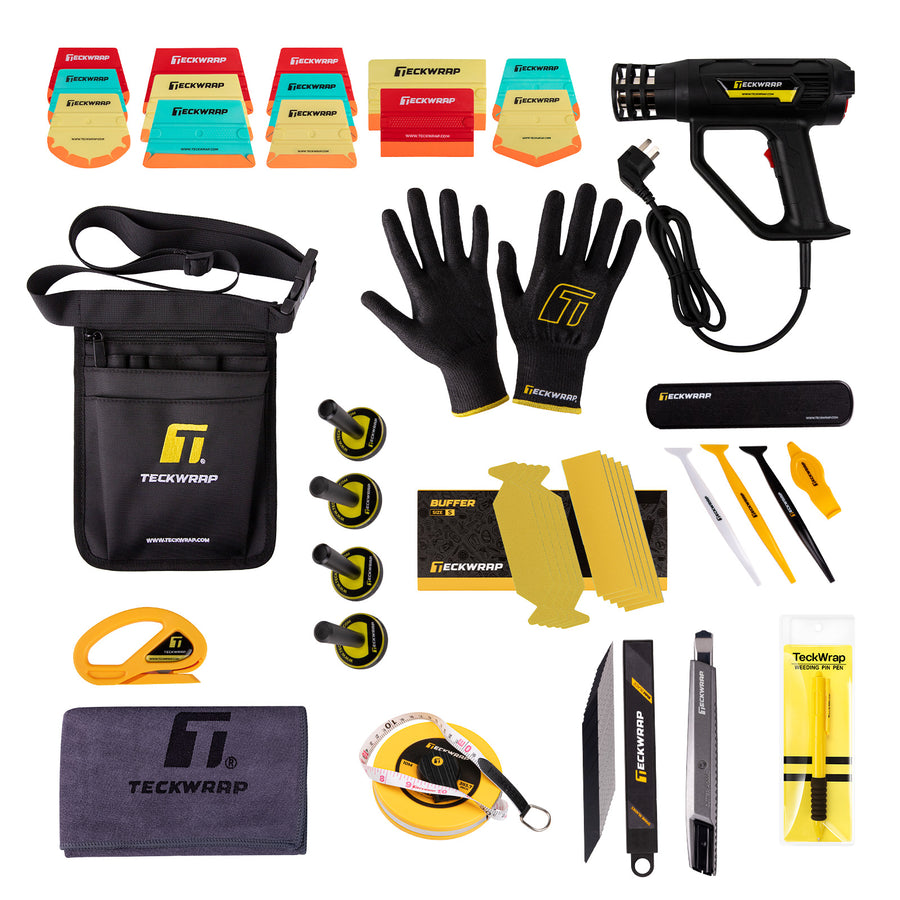
Wash, then clay bar, then solvent wipe. Adhesive bonds to the surface it actually touches — and that includes the rail dust and wax you left behind.
Handles, badges, lights and trim removed rather than cut around. It costs an hour and it is the single clearest difference between a good wrap and an obvious one.
Anchor the film, work from the centre outward, and let the air-release channels do their job. Overstretching to save film is how you get colour distortion and edge failure.
Post-heating to the specified temperature resets the film's memory so it stops trying to return to flat. Skip it and recessed areas will lift within weeks.
Wrap is rated for 5–7 years outdoors. Whether it gets there is mostly down to the first month and the weekly wash.
The adhesive continues to cure after installation. Give it three days before the first wash so edges are not disturbed while the bond is still developing.
pH-neutral shampoo, soft mitt, separate rinse bucket. Straight lines rather than circles, and dry with a clean microfibre to avoid water spotting.
Shade and covered parking meaningfully extend the life of any film. UV is the single largest factor in how a wrap ages, ahead of mileage.
Bird droppings, fuel spills and tree sap are acidic. Left on a hot panel they will stain the film — deal with them the same day, not the same week.
A close-range jet aimed at a seam will lift film that would otherwise have lasted years. Keep the lance back and never point it directly at an edge.
Petroleum-based cleaners, polishing compounds and automatic brush washes all attack the topcoat. Matte and satin finishes are especially unforgiving.
Application temperatures, post-heat specifications, and removal guidance are available for every series we produce.